
Renting Out Property in Dubai in 2026: Long-Term vs Holiday Home, Rules and Real Returns
SPI Dubai Research Team
26 October 2026 · 4 min read
Last reviewed:

Option 1: Long-term rental
How it works: you sign an annual tenancy contract with a tenant, register it in Ejari (Dubai's official tenancy registration system), and receive rent, traditionally in 1–4 cheques per year.
Key rules for landlords:
- Ejari registration is mandatory; tenants need it for utilities and visas.
- Rent increases are regulated. Dubai's rental index decides whether and by how much rent can go up at renewal — from 0% when the current rent is close to the market average, up to a maximum of 20% when it is far below. Since January 2025, DLD's Smart Rental Index also takes building classification (star rating) into account.
- Notice: changes to rent or contract terms must be notified to the tenant at least 90 days before the contract ends.
- Eviction is only possible on legal grounds (for example, non-payment, or the owner's own use or sale with formal notice periods).
Pros: predictable income, low management effort, tenant usually pays utilities. Cons: rent fixed for 12 months even if the market rises; increases limited by the index.
Option 2: Holiday home (short-term rental)
How it works: you rent the property by the night through platforms such as Airbnb or Booking.com, either yourself or through a licensed holiday-home operator.
Requirements (DET):
- Holiday home permit from DET. Individual owners can register up to 8 properties; professional operators need a trade licence.
- The building and your sale agreement must allow holiday homes — some buildings and communities prohibit them.
- Fees: a one-off registration and inspection fee (about AED 1,840) and an annual permit fee per bedroom (published at AED 300 per bedroom plus AED 70 per unit).
- Tourism Dirham: collected from guests per bedroom per night (AED 10–15) and paid to DET monthly.
- Insurance covering guest damage, guest registration with DET, and a QR code displayed at the door.
- Penalties for operating without a permit start from AED 5,000.
Pros: higher potential gross income in tourist areas (Downtown, Dubai Marina, JBR, Palm Jumeirah, Business Bay); flexibility to use the property yourself. Cons: furnishing costs, cleaning, utilities paid by you, operator fees (often 15–25% of revenue), seasonality and more work.
Long-term vs holiday home: comparison
| Long-term | Holiday home | |
|---|---|---|
| Contract | 12 months, Ejari | Per night, DET permit |
| Income | Stable | Higher potential, seasonal |
| Who pays utilities | Usually tenant | Owner |
| Furnishing | Optional | Required |
| Management | Low | High (or operator fee) |
| Rent increases | Limited by rental index | Set by market each night |
| Best areas | Communities with steady tenant demand | Tourist and waterfront areas |
How to calculate your real (net) rental yield
Gross yield = annual rent ÷ purchase price × 100. Net yield = (annual rent − service charges − management − maintenance − vacancy) ÷ total cost (price + buying fees) × 100.
Example: apartment bought for AED 1,500,000 (plus AED 95,000 fees), rented long-term for AED 110,000 a year
| Item | AED |
|---|---|
| Annual rent | 110,000 |
| Service charges (e.g. 900 sq ft × AED 18) | −16,200 |
| Management (5% of rent) | −5,500 |
| Maintenance reserve | −3,000 |
| One month vacancy | −9,167 |
| Net income | ≈ 76,133 |
| Gross yield (110,000 ÷ 1,500,000) | 7.3% |
| Net yield (76,133 ÷ 1,595,000) | ≈ 4.8% |
The figures are illustrative. Service charges and rents vary widely by building — always check the actual numbers. Our investment calculator does this calculation for a specific property.
Taxes on rental income
Individuals do not pay UAE personal income tax on rent. Corporate tax at 9% can apply to companies and licensed business activities with taxable profit above AED 375,000. Your country of residence may tax income from Dubai property — check with a local tax advisor.
Tips to maximise rental returns
- Compare net yields, not headline gross yields.
- Check service charges before buying; they make a big difference in older or amenity-rich buildings.
- Choose areas with steady demand and transport links; see our area guide.
- For holiday homes, confirm the building allows them before you buy.
- Use a licensed property manager if you live abroad.
Get a rental estimate
Ask an SPI Dubai advisor for a long-term and holiday-home rental estimate for a specific property or area, based on current market data. We usually reply within 10 minutes. Get advice.
This article is for general information only and is not financial, tax or legal advice. Rental rules, permit fees and market rents change; verify with DLD, RERA, DET or a qualified advisor. Yields shown are illustrative, not guaranteed.
Sources: Dubai Land Department — Smart Rental Index announcement (January 2025); Ejari (DLD); Department of Economy and Tourism holiday home requirements (as summarised by GuestReady, 2026); Khaleej Times on Dubai rental yields (16 February 2026); UAE Ministry of Finance (Corporate Tax).
Frequently asked questions
Can foreigners rent out property in Dubai?
Yes. Owners of any nationality, including non-residents, can rent out their property long-term or as a licensed holiday home.
What is Ejari?
Dubai's official online system for registering tenancy contracts. Every long-term lease must be registered in Ejari.
Do I need a licence to rent on Airbnb in Dubai?
Yes. Short-term rentals require a holiday home permit from Dubai's Department of Economy and Tourism (DET), and the building must allow holiday homes.
How much can landlords increase rent in Dubai?
It depends on the rental index: from 0% if the current rent is close to the market average up to 20% if it is far below, with at least 90 days' notice before the contract ends.
What is a good rental yield in Dubai?
Average gross residential yields were reported at around 6–8% in 2026. Net yield after service charges and costs is usually 1.5–3 percentage points lower.
Do I pay tax on rental income in Dubai?
Not as an individual in the UAE. Your home country may tax it.
Related properties

Dubai
Downtown Residences (sample)
Downtown Dubai · Sample Developer A
Why we selected it: Sample reason: developer delivery record and price against the area average.
Price from
AED 1,900,000
Payment plan
60/40
Handover
Q4 2027
Projected yield
6–8%

Dubai
Marina Tower (sample)
Dubai Marina · Sample Developer B
Why we selected it: Sample reason: developer delivery record and price against the area average.
Price from
AED 1,450,000
Payment plan
70/30 post-handover
Handover
Q2 2028
Projected yield
6–7%
Dubai
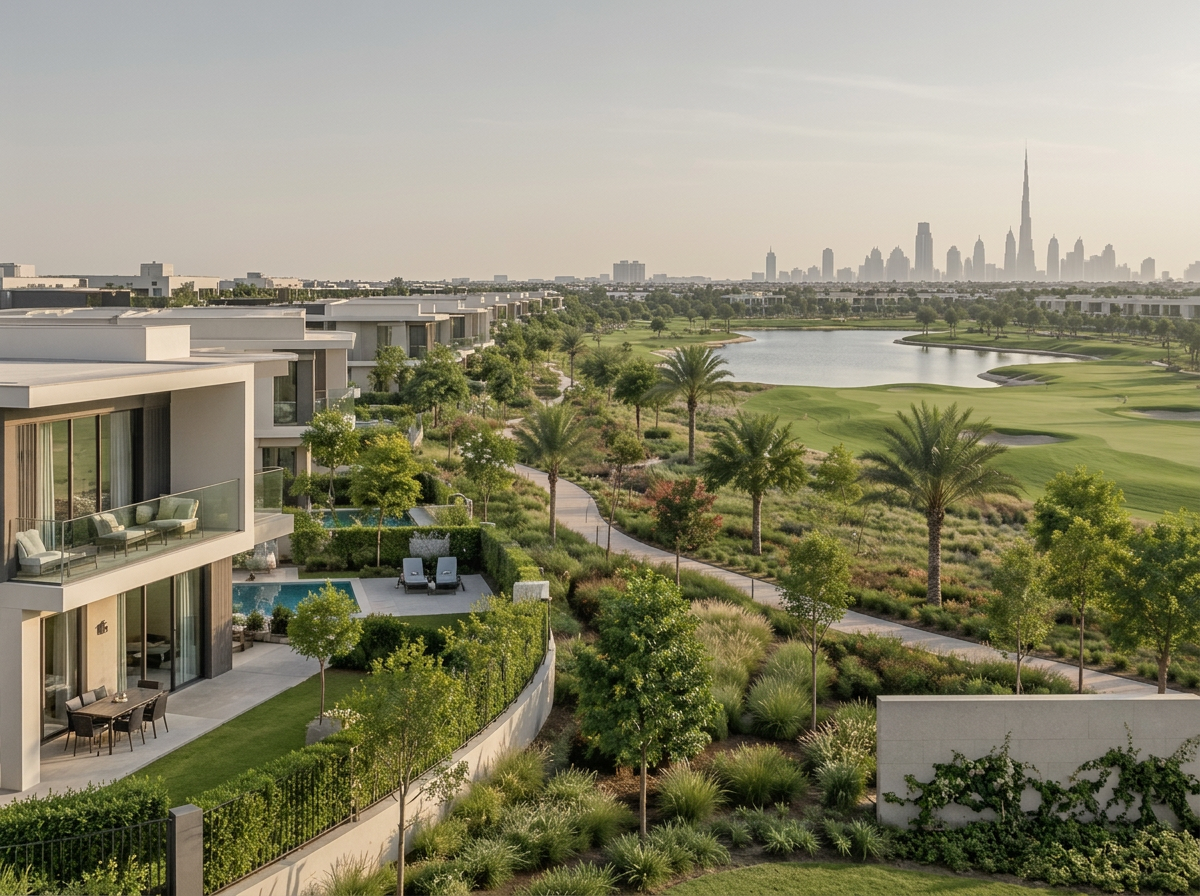
Hills Park Townhouses (sample)
Dubai Hills Estate · Sample Developer B
Why we selected it: Sample reason: developer delivery record and price against the area average.
Price from
AED 3,400,000
Payment plan
60/40
Handover
Q4 2028
Projected yield
5–6%
Related articles
Investment guides
Off-Plan vs Ready Property in Dubai: Which Is Better for Investors in 2026?
26 October 2026 · 5 min read

Investment guides
How to Buy Property in Dubai as a Foreigner: Step-by-Step Guide (2026)
26 October 2026 · 5 min read
Investment guides
Dubai Property Taxes and Buying Costs in 2026: The Complete Breakdown
26 October 2026 · 4 min read