
Property Inheritance in Dubai: Why Foreign Owners Need a Will (2026 Guide)
SPI Dubai Research Team
27 October 2026 · 6 min read
Last reviewed:
Why this matters for property owners
- Property and accounts can be frozen. Without a court order, heirs generally cannot sell, rent out or transfer the property. Under UAE law, the deceased's local bank accounts — including joint accounts — are frozen until the court rules on distribution.
- Joint ownership is not automatic inheritance. If two people own a property jointly, the surviving co-owner generally does not automatically receive the other's share; that share normally passes through inheritance.
- Your home-country will may not be enough. A foreign will may need to be translated, legalised and proven in UAE courts, which takes time and is not always accepted.
- Guardianship of children. A registered will can name guardians for minor children living in the UAE.
Default inheritance rules in the UAE
| Owner | Default rule without a UAE will |
|---|---|
| Non-Muslim | Federal Decree-Law No. 41 of 2022 on Civil Personal Status (in force since 1 February 2023, later updated): 50% to the surviving spouse, 50% equally among children regardless of gender. Heirs may ask the court to apply the law of the deceased's nationality instead. |
| Muslim | Sharia inheritance rules (fixed shares for spouse, children, parents and other relatives). |
There is no inheritance, estate or gift tax in the UAE. Heirs who are tax residents elsewhere may owe tax under their own country's law.
Options for registering a will in the UAE
| Option | Who can use it | Notes |
|---|---|---|
| DIFC Wills Service Centre | Non-Muslims aged 21+ with assets in the UAE (focus on Dubai and Ras Al Khaimah) | Several will types: full estate, property-only, financial assets, business shares, guardianship. No UAE residency required. |
| Abu Dhabi Judicial Department (ADJD) non-Muslim wills | Non-Muslims | Can be completed online with a notary video call; recognised across the UAE. Arabic translation required. |
| Dubai Courts notarised will | Residents and non-residents | Will notarised in Dubai Courts; often with Arabic translation. |
Fees vary by option and will type and change over time — check the current fee schedule with the registry or your lawyer.
Step by step: protecting your Dubai property
- List your UAE assets: properties (title deeds or Oqood certificates), bank accounts, company shares.
- Decide on beneficiaries and executors, and guardians for minor children.
- Choose the registry (DIFC, ADJD or Dubai Courts) with a lawyer's advice, based on your religion, assets and family situation.
- Draft and register the will. Keep copies with your executor and family.
- Review it after major life events: marriage, divorce, children, buying or selling property.
Other ways owners structure property
Some investors hold property through a company (for example a free zone or DIFC/ADGM structure) or a foundation to simplify succession. These structures have their own costs, rules and tax considerations, and developers and DLD have specific requirements for company ownership. Get professional advice before choosing one.
Need advice?
SPI Dubai can introduce you to legal partners who register wills for property owners, and our partner company Smart Insights supports clients with legal and administrative matters in the UAE. Contact us — we usually reply within 10 minutes.
This article is for general information only and is not legal advice. Inheritance and will rules are complex and depend on your personal circumstances; consult a qualified UAE lawyer.
Sources: UAE Federal Decree-Law No. 41 of 2022 on Civil Personal Status (in force 1 February 2023); DIFC Wills Service Centre; Abu Dhabi Judicial Department; Lucent Legal, "UAE inheritance and will guide" (2026).
Frequently asked questions
What happens to property in Dubai if the owner dies without a will?
The property and the owner's UAE bank accounts can be frozen until a UAE court decides who inherits. For non-Muslims the default split is 50% to the spouse and 50% to the children equally; for Muslims, Sharia rules apply.
Do expats need a will in Dubai?
It is strongly recommended for anyone who owns property or holds assets in the UAE, especially with family members or minor children.
What is a DIFC will?
A will registered with the DIFC Wills Service Centre in Dubai, available to non-Muslims, which sets out who inherits your UAE assets and who becomes guardian of your children.
Is there inheritance tax in the UAE?
No. The UAE has no inheritance, estate or gift tax. Heirs may owe tax in their own country.
Does a home-country will cover my Dubai property?
Not reliably. It may need translation, legalisation and court recognition, which can take time. A UAE-registered will is usually faster and clearer.
Related properties

Dubai
Downtown Residences (sample)
Downtown Dubai · Sample Developer A
Why we selected it: Sample reason: developer delivery record and price against the area average.
Price from
AED 1,900,000
Payment plan
60/40
Handover
Q4 2027
Projected yield
6–8%

Dubai
Marina Tower (sample)
Dubai Marina · Sample Developer B
Why we selected it: Sample reason: developer delivery record and price against the area average.
Price from
AED 1,450,000
Payment plan
70/30 post-handover
Handover
Q2 2028
Projected yield
6–7%
Dubai
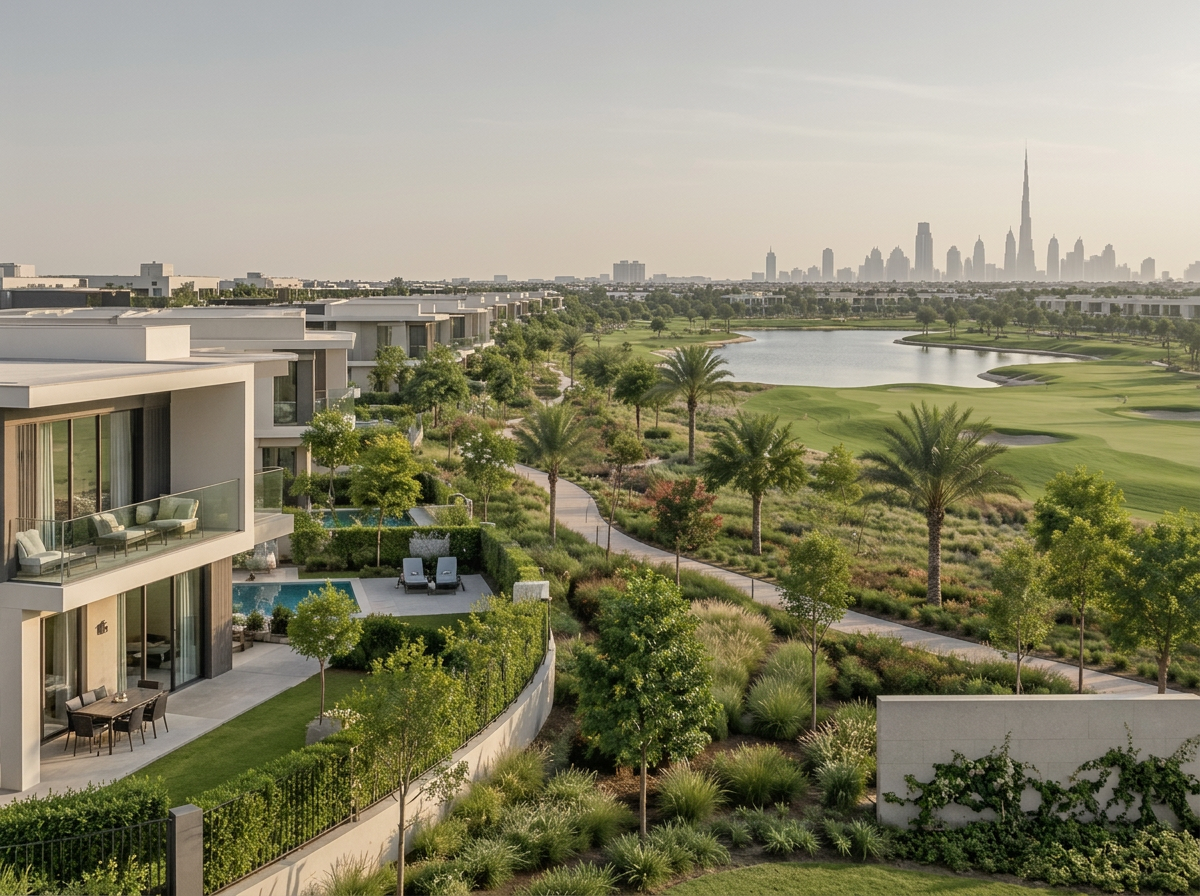
Hills Park Townhouses (sample)
Dubai Hills Estate · Sample Developer B
Why we selected it: Sample reason: developer delivery record and price against the area average.
Price from
AED 3,400,000
Payment plan
60/40
Handover
Q4 2028
Projected yield
5–6%
Related articles

Golden Visa & legal
Dubai Golden Visa Through Property in 2026: Requirements, Off-Plan Rules and Costs
26 October 2026 · 4 min read

Investment guides
How to Buy Property in Abu Dhabi as a Foreigner: 2026 Guide
27 October 2026 · 6 min read

Investment guides
Dubai Service Charges Explained: What Owners Pay in 2026 and How to Check Them
27 October 2026 · 6 min read