
Mortgage in Dubai for Non-Residents and Expats: 2026 Guide
SPI Dubai Research Team
26 October 2026 · 4 min read
Last reviewed:

Who can get a mortgage in Dubai?
- UAE residents with a residence visa and income (salaried or self-employed).
- Non-residents living abroad, with income they can document. Not every bank lends to every nationality, and the property must be in a project the bank accepts.
- Golden Visa holders are treated as residents for most bank purposes.
How much can you borrow? (LTV rules)
The UAE Central Bank sets maximum loan-to-value (LTV) ratios. Banks can lend less, never more.
| Buyer and property | Maximum LTV | Minimum down payment |
|---|---|---|
| Expat resident, first home up to AED 5M | 80% | 20% |
| Expat resident, first home above AED 5M | 65–70% | 30–35% |
| Second / investment property | 60% | 40% |
| Non-resident (bank practice) | Usually 50–60% | 40–50% |
| Off-plan (bank practice) | Often up to about 50%, mostly at or near handover | — |
LTV is calculated on the lower of the purchase price and the bank's valuation. If the valuation comes in below the price, you pay the difference in cash.
Banks also check affordability: your total monthly debt payments, including the new mortgage, generally may not exceed 50% of your monthly income.
Interest rates
UAE mortgages are offered as:
- Fixed rate for an initial period (often 1–5 years), then variable.
- Variable rate, linked to EIBOR (the Emirates Interbank Offered Rate) plus the bank's margin.
Non-residents usually pay a slightly higher rate than residents. Rates change with the market, so compare current offers from several banks or use a mortgage broker.
Costs of a mortgage
| Cost | Typical amount |
|---|---|
| DLD mortgage registration | 0.25% of the loan + AED 290 |
| Bank valuation | About AED 2,500–3,500 |
| Bank arrangement fee | Up to 1% of the loan (varies, sometimes waived) |
| Life and property insurance | Required by most banks |
| Early settlement fee | Capped by UAE Central Bank rules; check your offer |
These come on top of the normal buying costs (4% DLD fee and others). Full list: Dubai property taxes and buying costs.
Documents you usually need
Salaried: passport, visa and Emirates ID (residents), salary certificate or payslips, 3–6 months of bank statements, credit report (Al Etihad Credit Bureau for residents; for non-residents, a credit report from the home country is often requested).
Self-employed: passport, trade licence, company bank statements, audited financial statements or tax returns, personal bank statements.
Requirements vary by bank and nationality. Some banks also set a minimum monthly income.
Step by step: getting a mortgage in Dubai
- Pre-approval. Apply to one or more banks (directly or through a mortgage broker) for an approval in principle. It shows how much you can borrow and is usually valid for about 60–90 days.
- Choose the property within your approved budget and sign the MOU (Form F) with the seller.
- Valuation. The bank values the property.
- Final offer letter. The bank issues the final loan offer; you sign it and arrange insurance.
- Transfer at DLD. At the trustee office, the bank pays the seller (or the seller's bank), the property is registered in your name and the mortgage is registered on the title.
Allow about 4–8 weeks from pre-approval to transfer.
Can I get a mortgage for off-plan property?
Options are limited. Most banks finance off-plan property only at or close to completion, often at lower LTVs and only in projects they have approved. A common strategy is to pay the construction instalments in cash and take a mortgage for the handover payment. Learn more about payment plans.
Mortgage and the Golden Visa
A mortgaged property can qualify for the 10-year Golden Visa if its value is AED 2 million or more. The bank must issue a letter in the format required by the authorities. See our Golden Visa guide.
Need help with financing?
SPI Dubai works with mortgage specialists who compare offers from UAE banks for residents and non-residents. Get mortgage support or calculate your payment in the investment calculator. We usually reply within 10 minutes.
This article is for general information only and is not financial advice or a loan offer. Bank criteria and rates change; confirm current terms with the bank or a licensed mortgage broker.
Sources: UAE Central Bank mortgage regulations (LTV caps, debt burden ratio); Dubai Land Department mortgage registration fees (2026); Bayut, "Guide to mortgage loans for non-resident investors in Dubai" (2026).
Frequently asked questions
Can a non-resident get a mortgage in Dubai?
Yes. Many UAE banks lend to non-residents, usually up to 50–60% of the property value, subject to income, nationality and the bank's list of approved projects.
What is the minimum down payment in Dubai?
For expat residents buying a first home up to AED 5 million, 20% of the price. For non-residents, usually 40–50%. Buying costs such as the 4% DLD fee are paid in addition.
What is the maximum mortgage term in the UAE?
Up to 25 years, and usually the loan must end before age 65 for salaried borrowers or 70 for self-employed borrowers.
How long does it take to get a mortgage in Dubai?
Pre-approval often takes a few days to two weeks; from pre-approval to transfer, about 4–8 weeks.
Can I get a mortgage on off-plan property in Dubai?
Only with some banks and usually at or near handover. Many buyers pay instalments in cash and finance the final payment.
Related properties

Dubai
Downtown Residences (sample)
Downtown Dubai · Sample Developer A
Why we selected it: Sample reason: developer delivery record and price against the area average.
Price from
AED 1,900,000
Payment plan
60/40
Handover
Q4 2027
Projected yield
6–8%

Dubai
Marina Tower (sample)
Dubai Marina · Sample Developer B
Why we selected it: Sample reason: developer delivery record and price against the area average.
Price from
AED 1,450,000
Payment plan
70/30 post-handover
Handover
Q2 2028
Projected yield
6–7%
Dubai
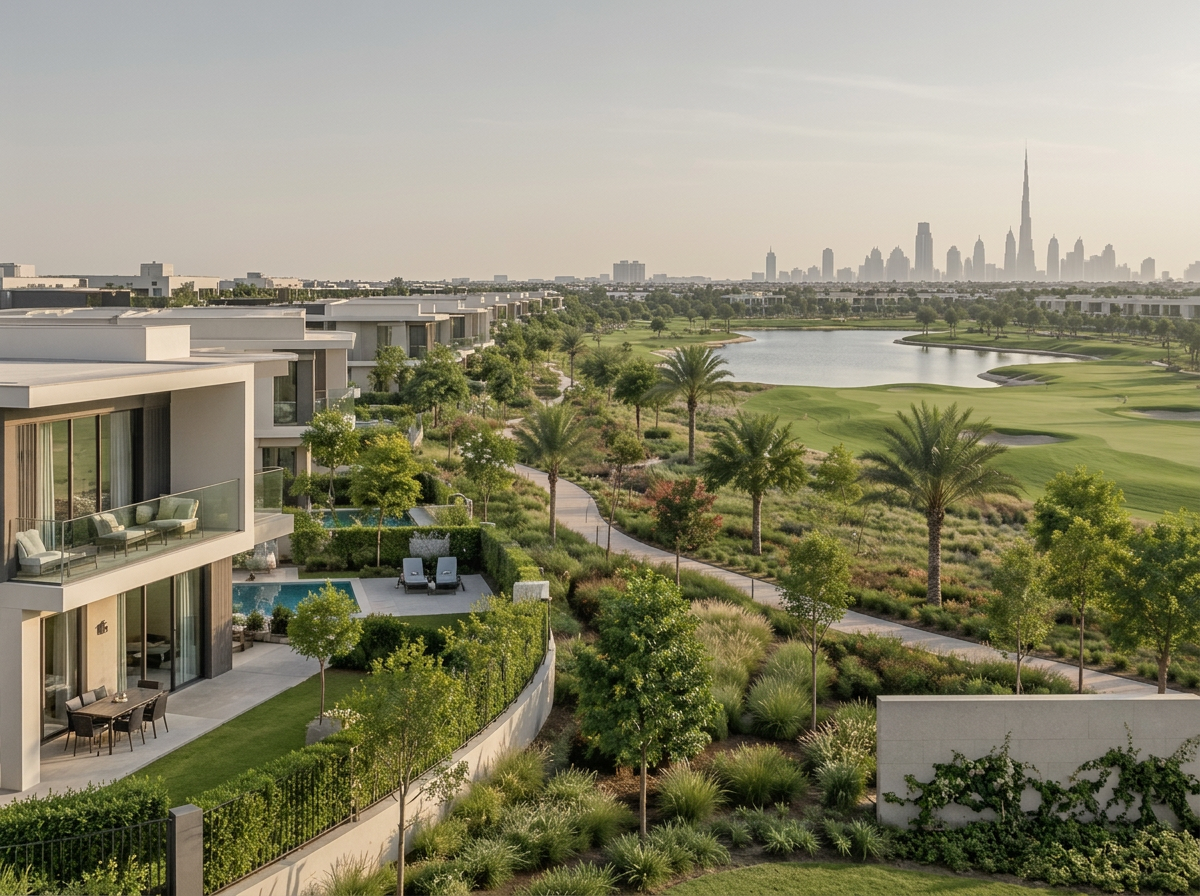
Hills Park Townhouses (sample)
Dubai Hills Estate · Sample Developer B
Why we selected it: Sample reason: developer delivery record and price against the area average.
Price from
AED 3,400,000
Payment plan
60/40
Handover
Q4 2028
Projected yield
5–6%
Related articles
Investment guides
Off-Plan vs Ready Property in Dubai: Which Is Better for Investors in 2026?
26 October 2026 · 5 min read

Golden Visa & legal
Dubai Golden Visa Through Property in 2026: Requirements, Off-Plan Rules and Costs
26 October 2026 · 4 min read

Areas
Where to Invest in Dubai and Abu Dhabi in 2026: Area Guide for Property Investors
26 October 2026 · 5 min read